Week 5: Leadership as the Foundation
Introduction
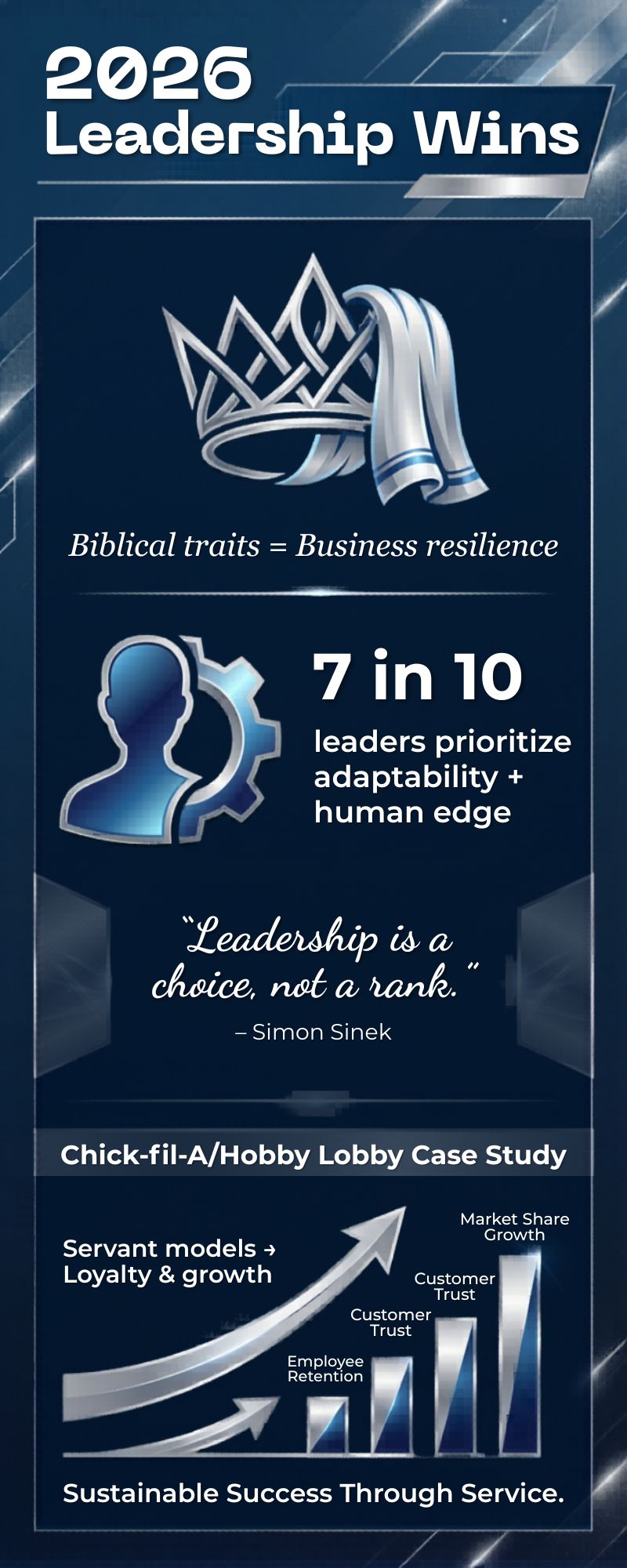
Leadership isn't a title - it's a choice that either builds empires of trust or crumbles them under ego. Consider a mid-sized family-owned distribution company where the CEO's self-focused decisions led to high turnover, fractured teams, and stalled growth, only to rebound dramatically after he embraced humble, servant-oriented leadership rooted in scripture. This mirrors the core message in Larry Burkett's Business By the Book: True business success begins with self-aware, biblically grounded leaders who prioritize respect, clear communication, and a compelling vision aligned with God's kingdom. In our ongoing 9-week series, Week 5 tackles leadership as the bedrock of any enterprise. As 2026 Deloitte Global Human Capital Trends reveal, 7 in 10 business leaders now prioritize speed, adaptability, and human-centered approaches amid disruption - yet many overlook the timeless foundation scripture provides. Drawing from Burkett's insights, key biblical passages, and modern examples, we'll explore how humble, Christ-like leadership fosters resilient teams, ethical cultures, and lasting impact in an era demanding both agility and integrity.
Biblical Foundation
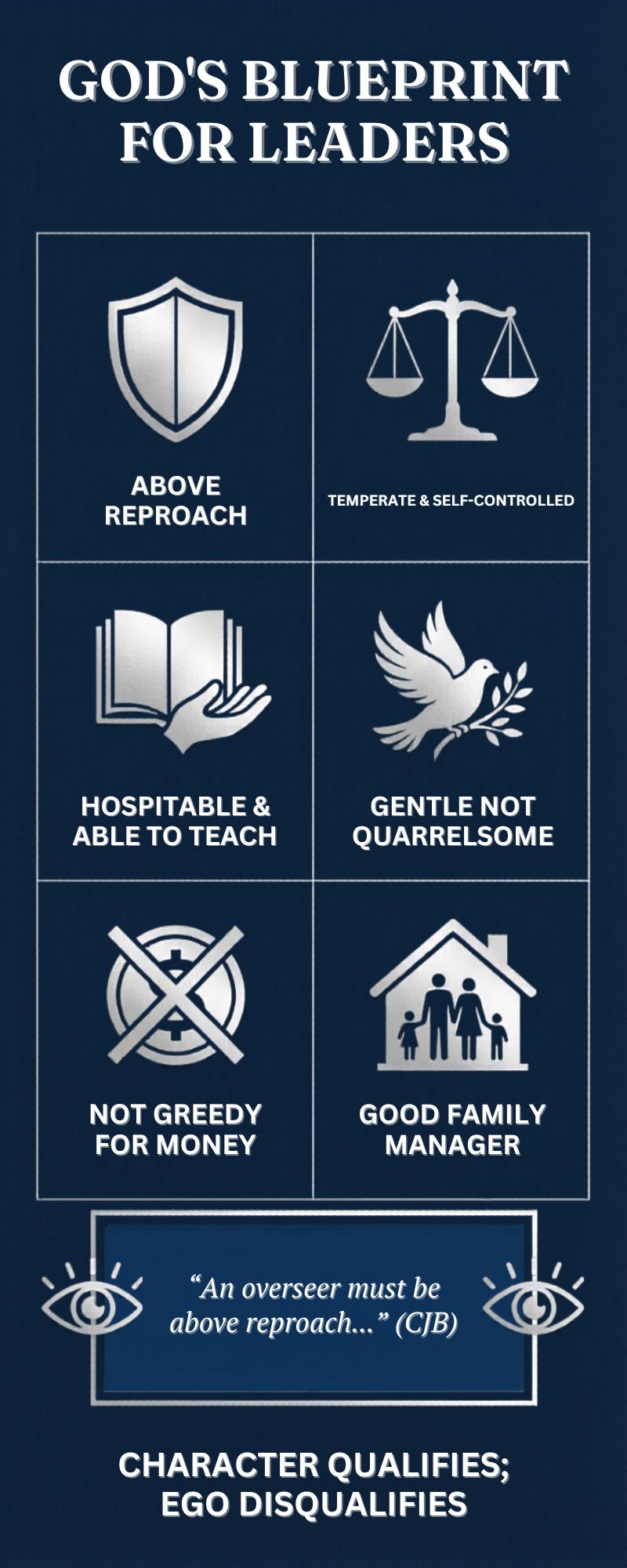
Burkett draws heavily from 1 Timothy 3:1-7, Paul's detailed qualifications for overseers (leaders in the church, applicable to business oversight). The Complete Jewish Bible (CJB) states it thus: "Here is a statement you can trust: Anyone aspiring to be an overseer is seeking worthwhile work. An overseer must be above reproach, faithful to his wife, temperate, self-controlled, orderly, hospitable and able to teach... not a drunkard, not violent but gentle, not quarrelsome, not greedy for money... He must manage his own household well... He must have a good reputation with those outside the community..."
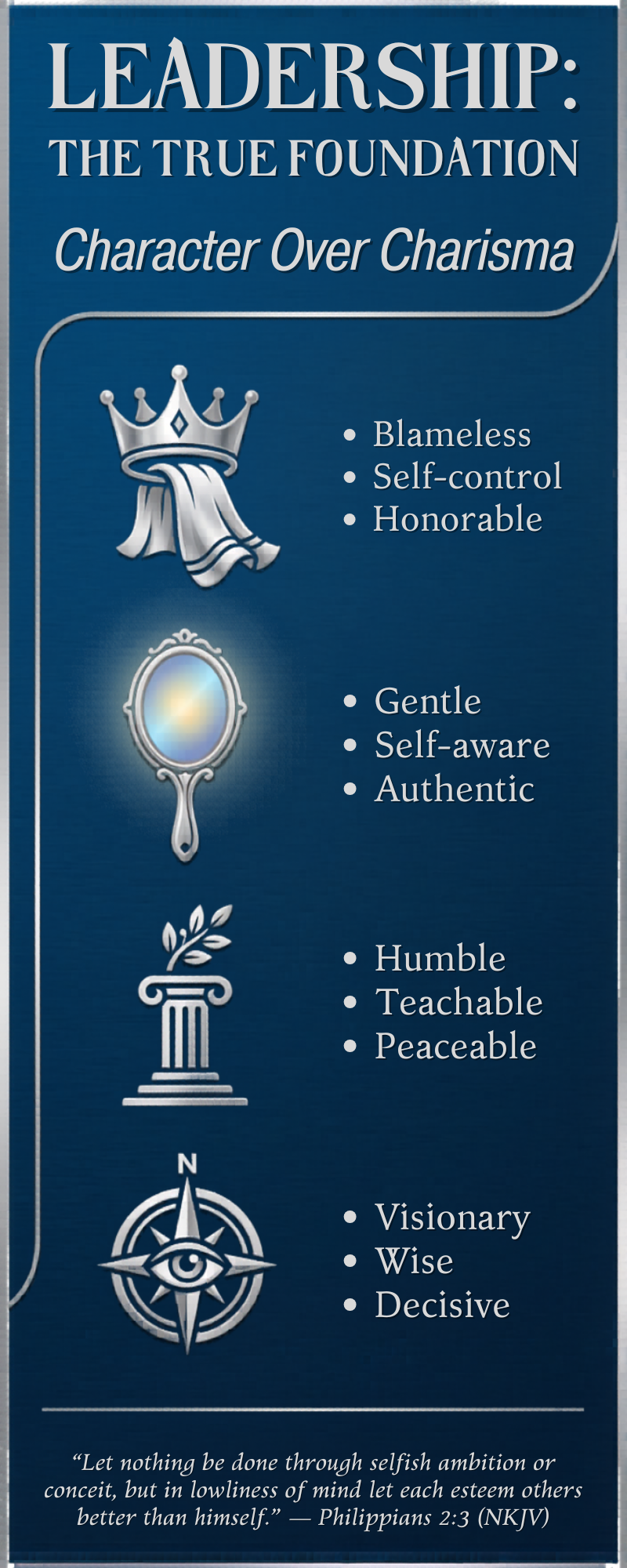
These verses outline character over charisma: Blameless integrity, self-control, hospitality, gentleness, financial contentment, and family management as proof of capability. Burkett applies this to CEOs and managers - leaders who model these traits avoid pitfalls like greed or volatility that destroy organizations.
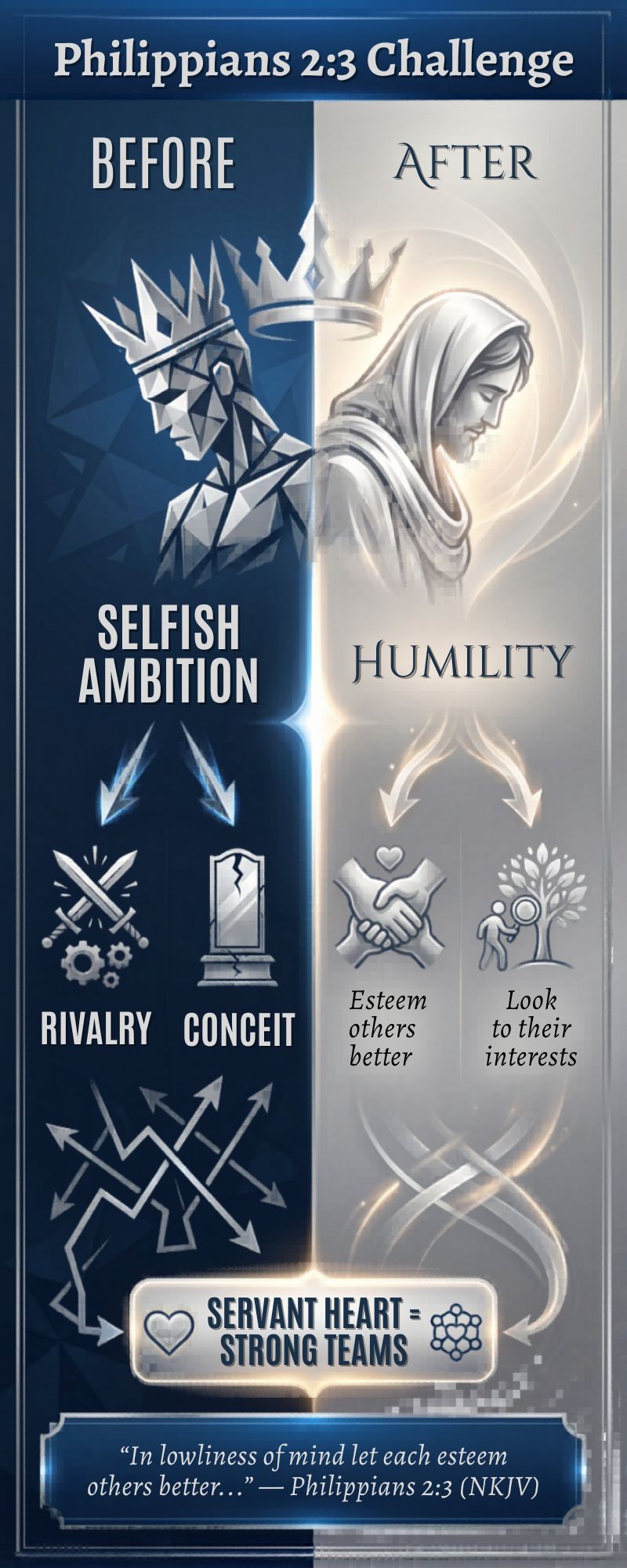
Complementing this is Philippians 2:3, emphasizing humility: CJB: "Do nothing out of rivalry or vanity; but, in humility, regard each other as better than yourselves." Paul urges believers to reject self-promotion, instead valuing others supremely - a direct antidote to toxic leadership. Together, these passages demand leaders who are self-aware (knowing their flaws), respectful (esteeming teams), communicative (able to teach/gently guide), and visionary (casting God-aligned direction), transforming workplaces into reflections of Christ's servant heart.
Burkett’s Key Insights
Burkett positions leadership as the "foundation" because everything - culture, decisions, legacy - flows from the leader's character. He critiques secular models obsessed with charisma or control, contrasting them with biblical self-awareness: Leaders must first examine their hearts (Psalm 139:23-24) to avoid projecting unresolved issues onto teams. Burkett stresses respect as foundational - treating employees with dignity, not as cogs - drawing from 1 Timothy's "gentle, not quarrelsome" statement to advocate conflict resolution through humility rather than dominance.
Communication emerges as vital: Clear, honest dialogue builds trust; vague or manipulative styles breed fear. Vision, per Burkett, isn't ego-driven ambition but God-revealed direction - leaders articulate "why" (kingdom impact) alongside "what" (goals), inspiring buy-in. He shares anonymized stories: An arrogant owner who lost key talent until humbling himself per Philippians 2:3; a humble manager who fostered loyalty through consistent respect, growing the firm sustainably. Burkett's practical tools include self-assessments (rated against 1 Timothy qualities), 360-degree feedback for blind spots, and prayerful vision-casting sessions. His overarching point: Leadership is stewardship - managing people as God's image-bearers, not resources. When rooted in humility and biblical traits, it yields teams that innovate, endure trials, and glorify God.
Worldly Application
Burkett's 1998 biblically-derived model aligns strikingly with 2026 leadership realities. Deloitte's 2026 Global Human Capital Trends report highlights how top organizations thrive by enabling "speed, adaptability, and a human edge" - leaders who foster curiosity, respect, and continuous improvement mirror 1 Timothy's "able to teach" and gentle qualities. The report notes 60% of executives use AI in decisions, but only 5% manage it well, underscoring the need for humble, ethical oversight to avoid "culture debt."
Simon Sinek's enduring influence reinforces this: His quotes like "Leadership is a choice. It is not a rank" and "Be the leader you wish you had" echo Philippians 2:3's humility, emphasizing care over control. Sinek's "Leaders Eat Last" philosophy - prioritizing team safety - parallels Burkett's respect emphasis, with companies adopting it seeing higher engagement.
Faith-based exemplars prove it works: Chick-fil-A's leadership, shaped by S. Truett Cathy's values, maintains low turnover through servant practices and Sunday closures, consistently ranking high in employee satisfaction. Hobby Lobby's David Green models integrity and generosity, crediting biblical principles for decades of growth and family succession. In-N-Out's faith-rooted culture, including subtle evangelism, sustains loyalty amid expansion. These companies demonstrate that humble, character-driven leadership drives resilience, even in disrupted markets.
Practical Takeaways + Reflection
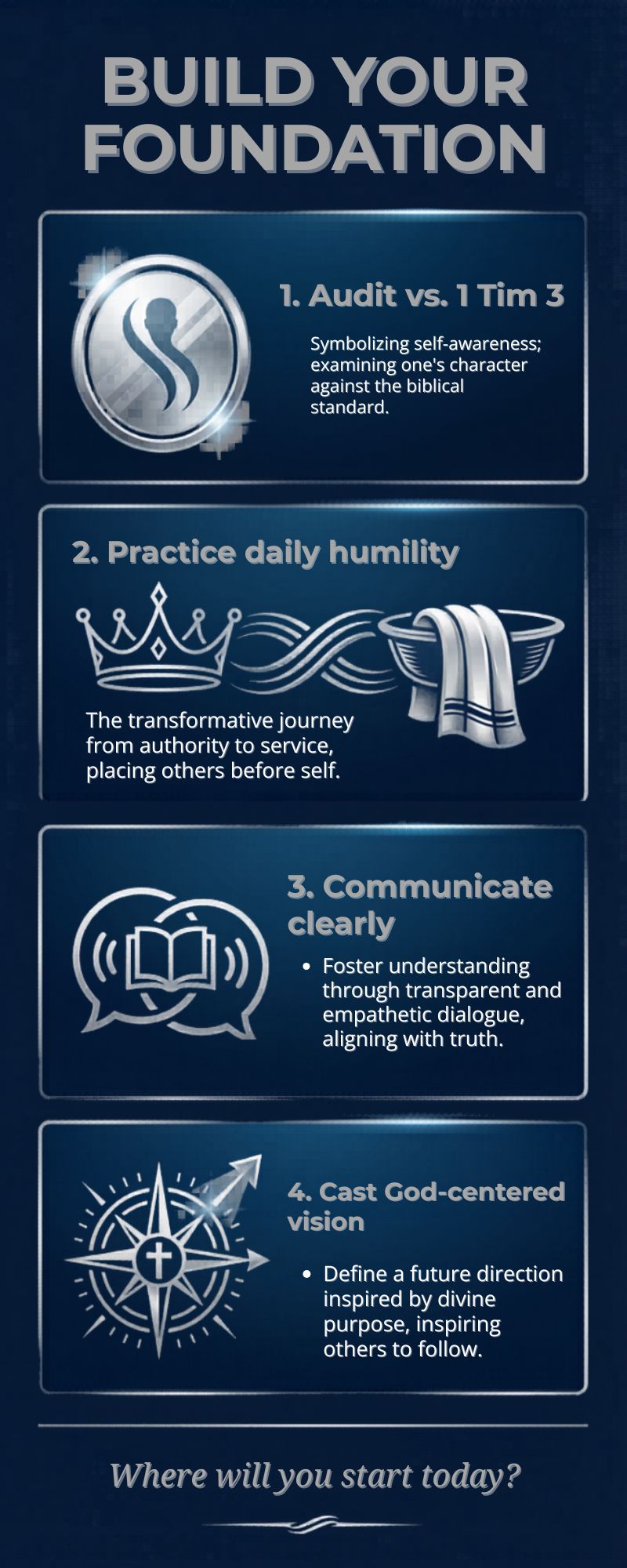
Build foundational leadership with these steps:
- Self-Awareness Audit: Score yourself against 1 Timothy 3:1-7 traits; seek honest feedback.
- Humility Practice: Daily apply Philippians 2:3 - actively esteem team members in meetings/decisions.
- Communication Upgrade: Implement regular, transparent check-ins; teach/mentor intentionally.
- Vision Alignment: Craft a God-centered vision statement; share it consistently.
Reflection Questions:
- Which 1 Timothy quality do I most need to strengthen, and why?
- Where has selfish ambition crept into my leadership?
- How can esteeming others better transform my team dynamics?
Leadership founded on scripture isn't soft - it's strong, enduring, and eternally rewarding.
References
Burkett, L. (1998). Business by the book: Complete guide of biblical principles for the workplace. Thomas Nelson.
Deloitte. (2026). 2026 Global Human Capital Trends. https://www.deloitte.com/us/en/insights/topics/talent/human-capital-trends.html
Sinek, S. (n.d.). Simon Says: A collection of quotes. The Optimism Company. https://simonsinek.com/quotes
QuoteFancy. (2026). Top 500 Simon Sinek quotes (2026 update). https://quotefancy.com/simon-sinek-quotes
Faith Driven Entrepreneur. (n.d.). Episode 224 - The Hobby Lobby Decision with David Green. https://faithdrivenentrepreneur.org/episode-224-the-hobby-lobby-decision-with-david-green
Fast Company. (2023). Chick-fil-A, In-N-Out, and Forever 21 have Christianity in their DNA. https://www.fastcompany.com/90989571/christian-brands-chick-fil-a-in-n-out-forever-21-hobby-lobby-carls-jr